
Dating Deconstructed: The 5+Hour Guide to Quiet Confidence
Discover the grounded, science-based approach to attraction and dating designed specifically for intelligent men.
Quiet Confidence: A learned skill, similar to mastering a new language, that focuses on internal development rather than external manipulation or physical perfection. It is characterized by being relaxed, authentic, and not needing to impress or win over every person you meet.
Stacy: A term used in online theories to describe a woman with "supermodel good looks," typically characterized as tall, slim, and big-chested.
Chad: A term referring to "pretty boy" types who are conventionally handsome and perceived to have an easy time with women.
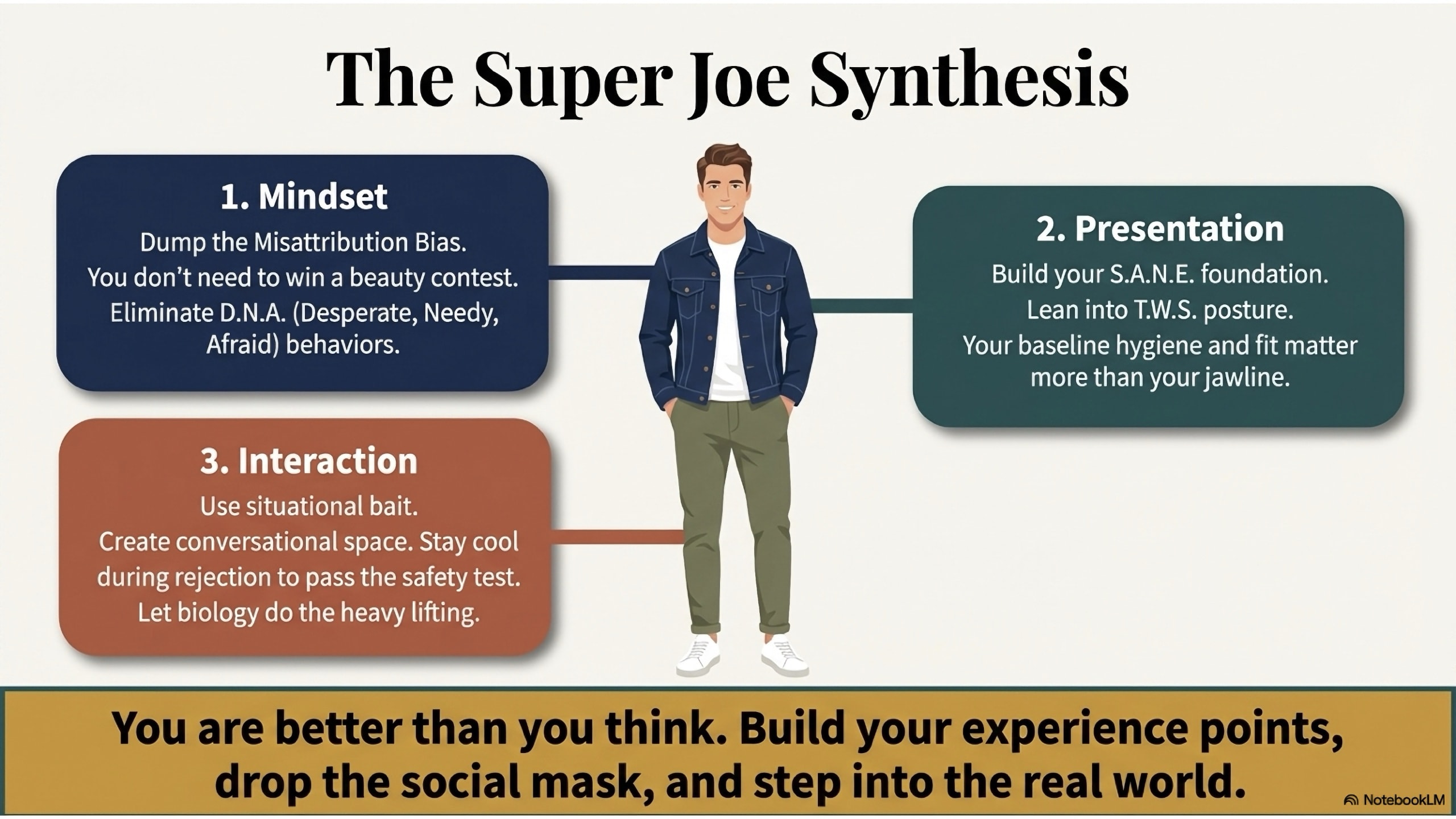
Super Joe Concept: A concept describing the small percentage of average-looking men who are highly successful with women through genuine confidence, high self-awareness, and learnable behaviors rather than tricks.
Formative Attraction: A process where attraction develops over time as individuals get to know each other, rather than through an instant physical spark.
Learned Helplessness: A form of giving up, common among highly intelligent people who convince themselves a problem (like dating) is unsolvable, often using genetics or other fixed traits as an excuse to avoid effort.
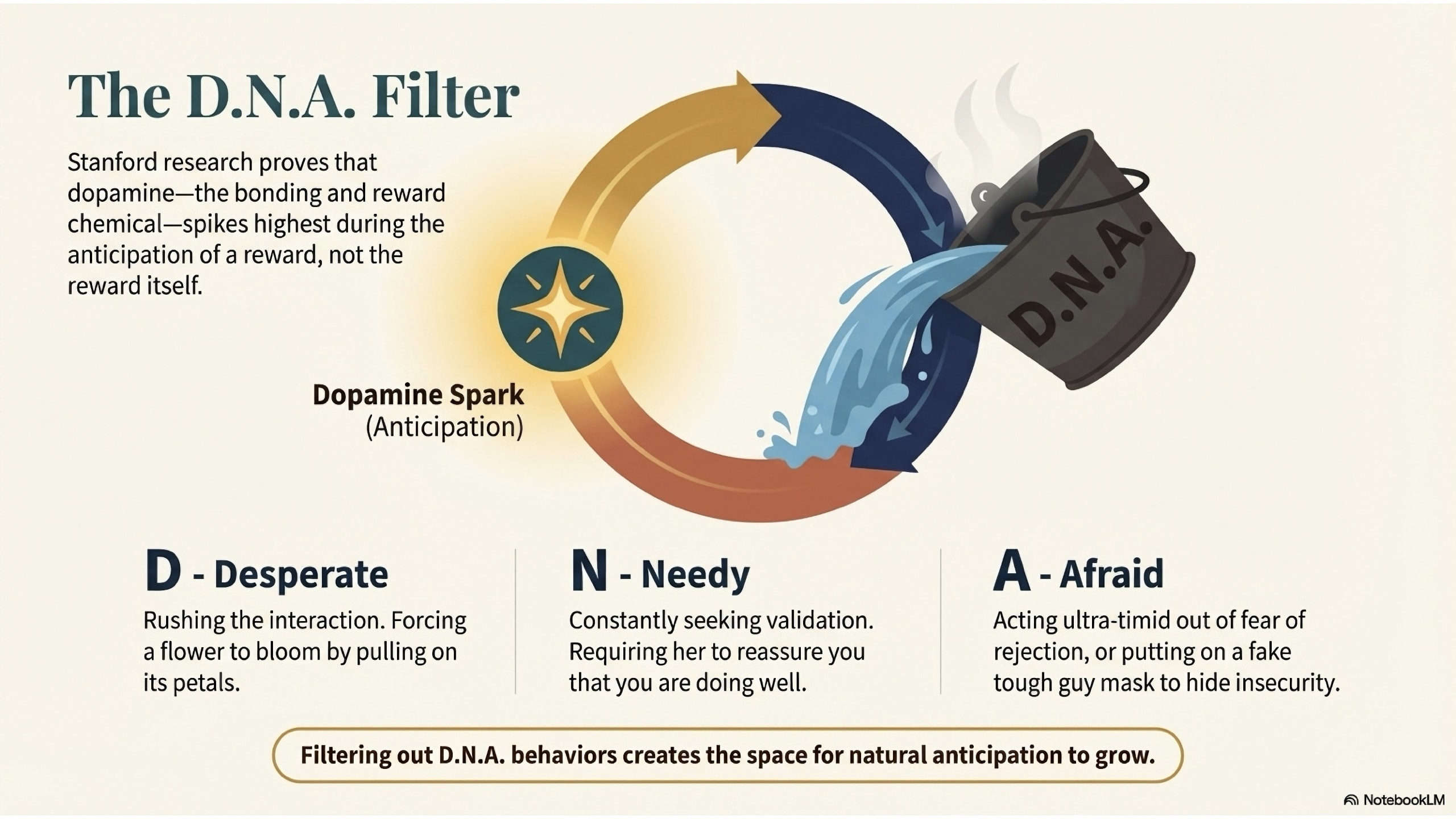
DNA Behaviors: Being Desperate, Needy, and Afraid around women. These behaviors trigger biological responses in others that shut down attraction by disrupting the "anticipation and reward" dopamine loop.
DNA Filter: A mental tool for recognizing and filtering out desperate, needy, or fearful behaviors before they manifest, allowing a person's authentic self to shine through.
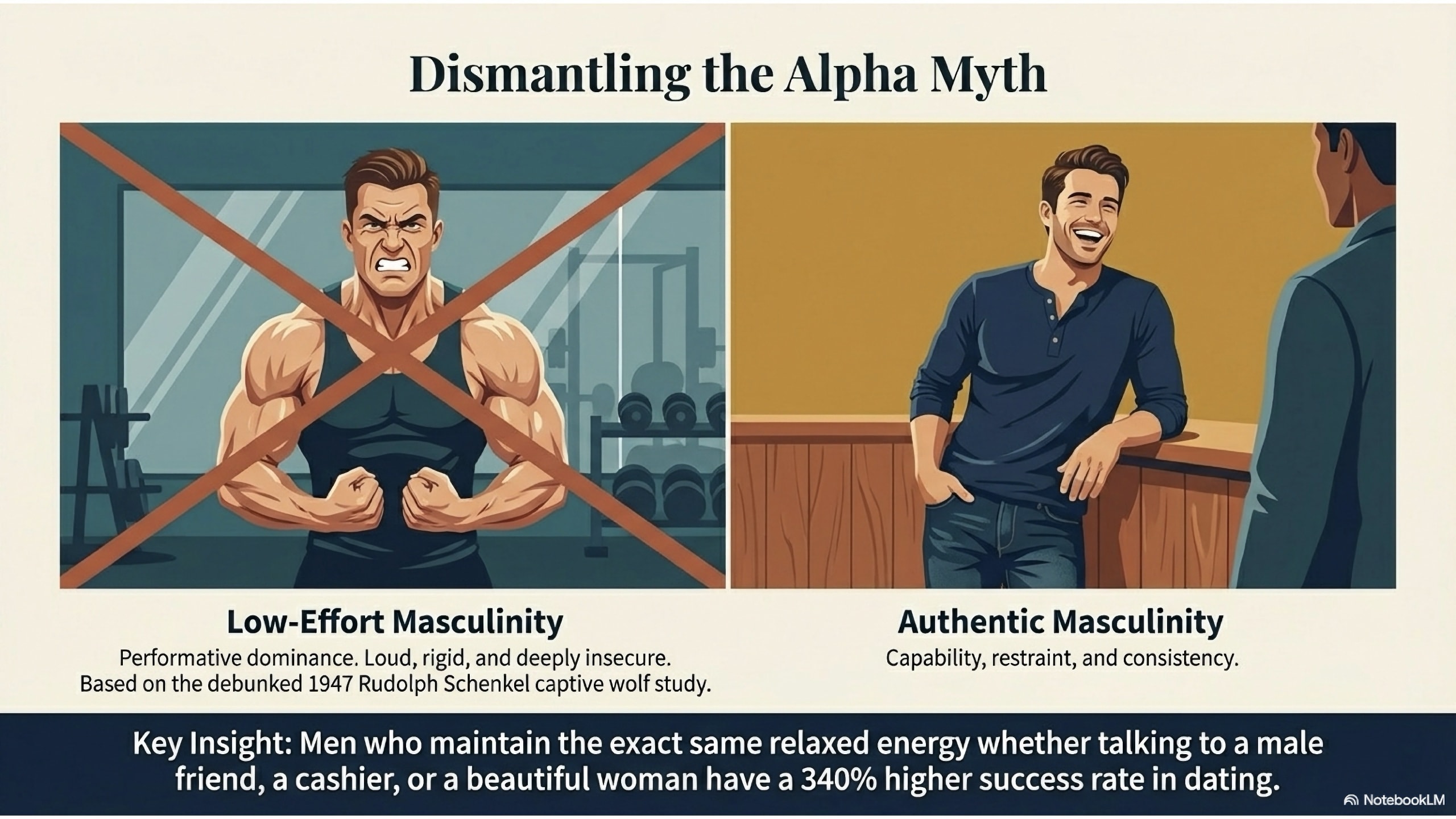
Alpha Male (Misconception): Often misunderstood in dating advice as being "the biggest and baddest wolf," this concept is based on flawed 1940s research on captive wolves. In reality, true "alphas" are described as "moms and dads" or people who have actual followers who they look out for and lead.
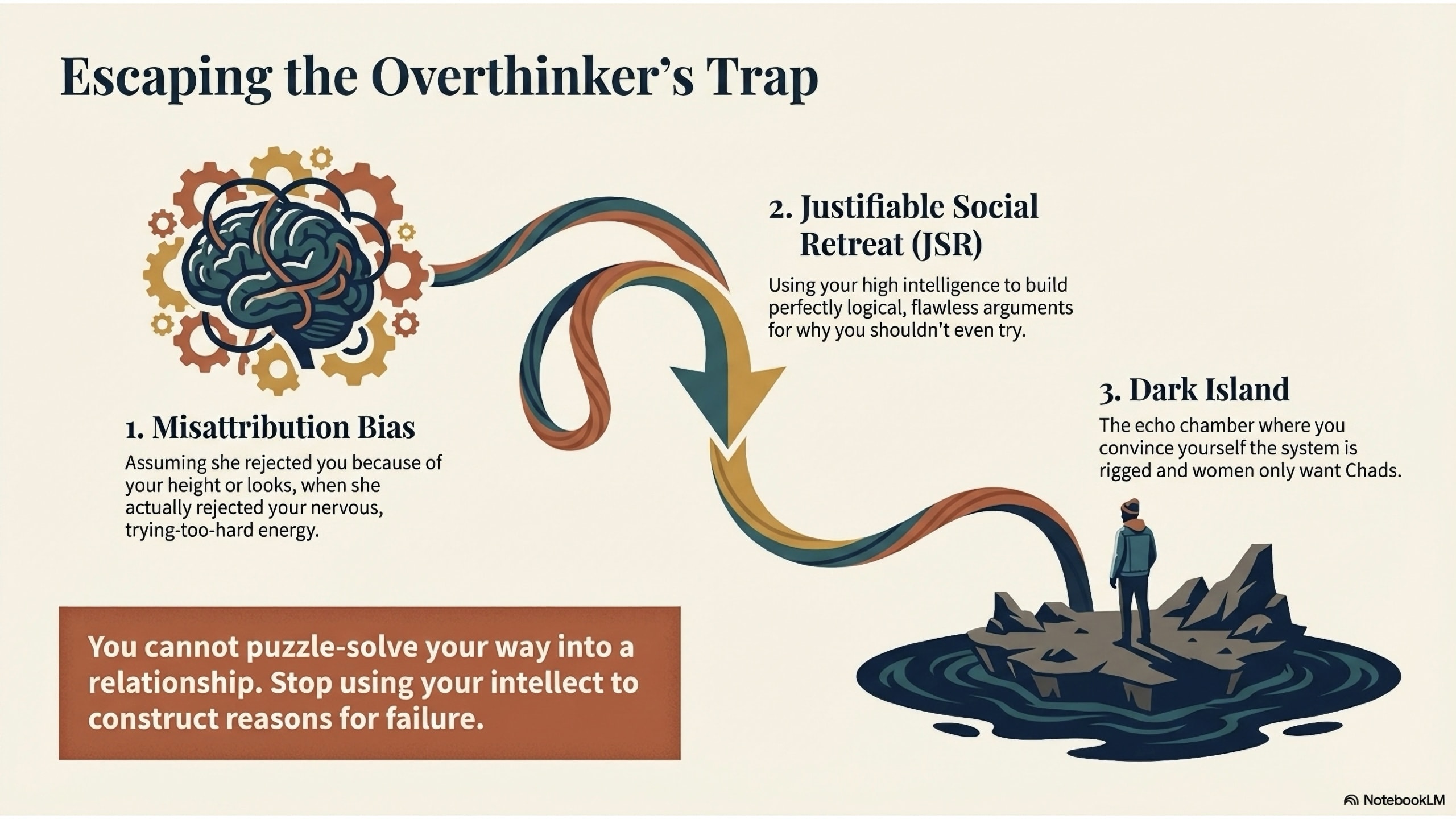
Justifiable Social Retreat (JSR): A psychological phenomenon where the brain becomes skilled at creating perfectly logical, rational arguments for why a person should give up and not even try to socialize.
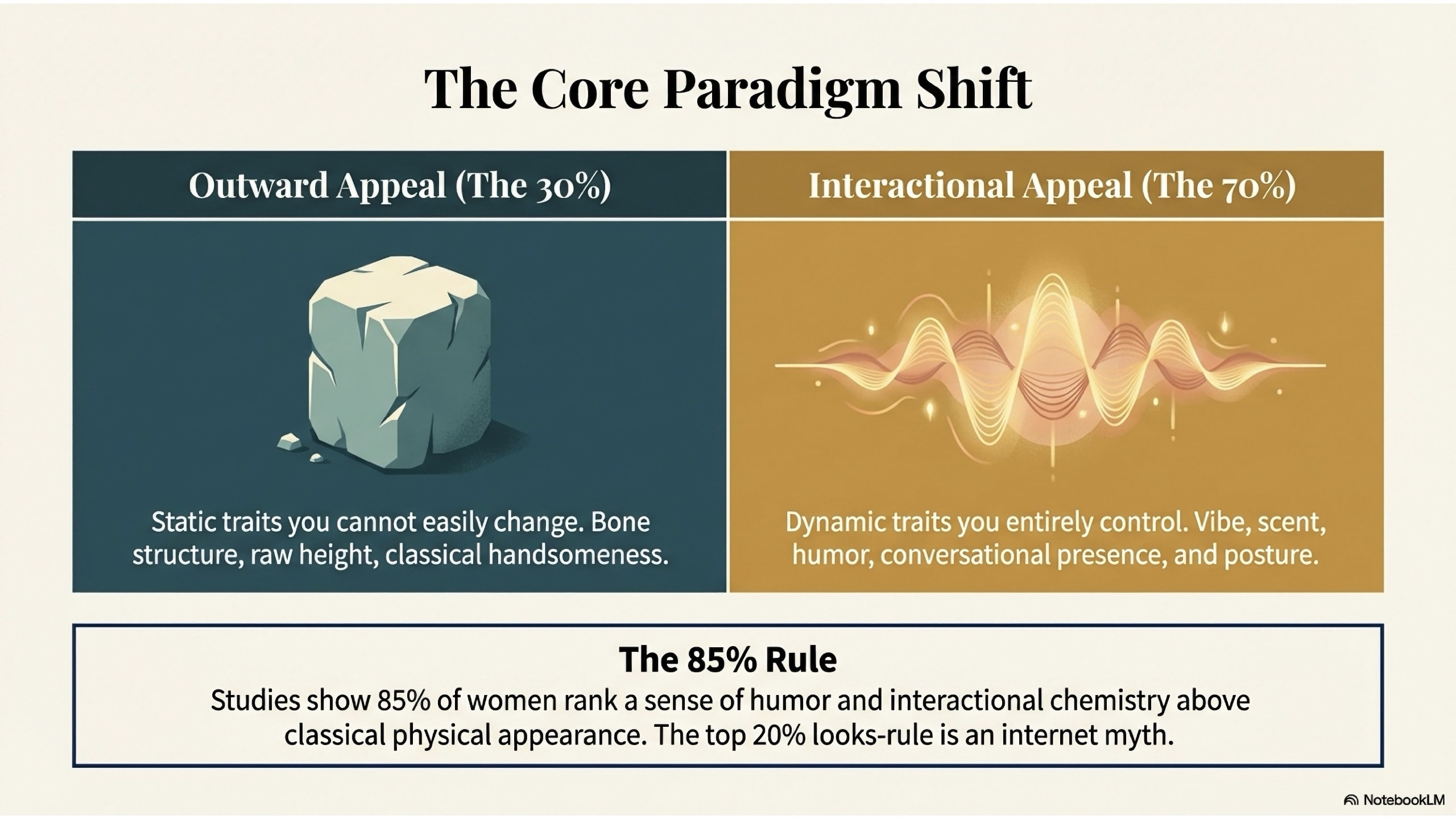
Interactional Appeal: The type of attraction that increases as people get to know someone's personality, vibes, and charisma.
Outward Appeal: Attraction based solely on initial physical appearance.
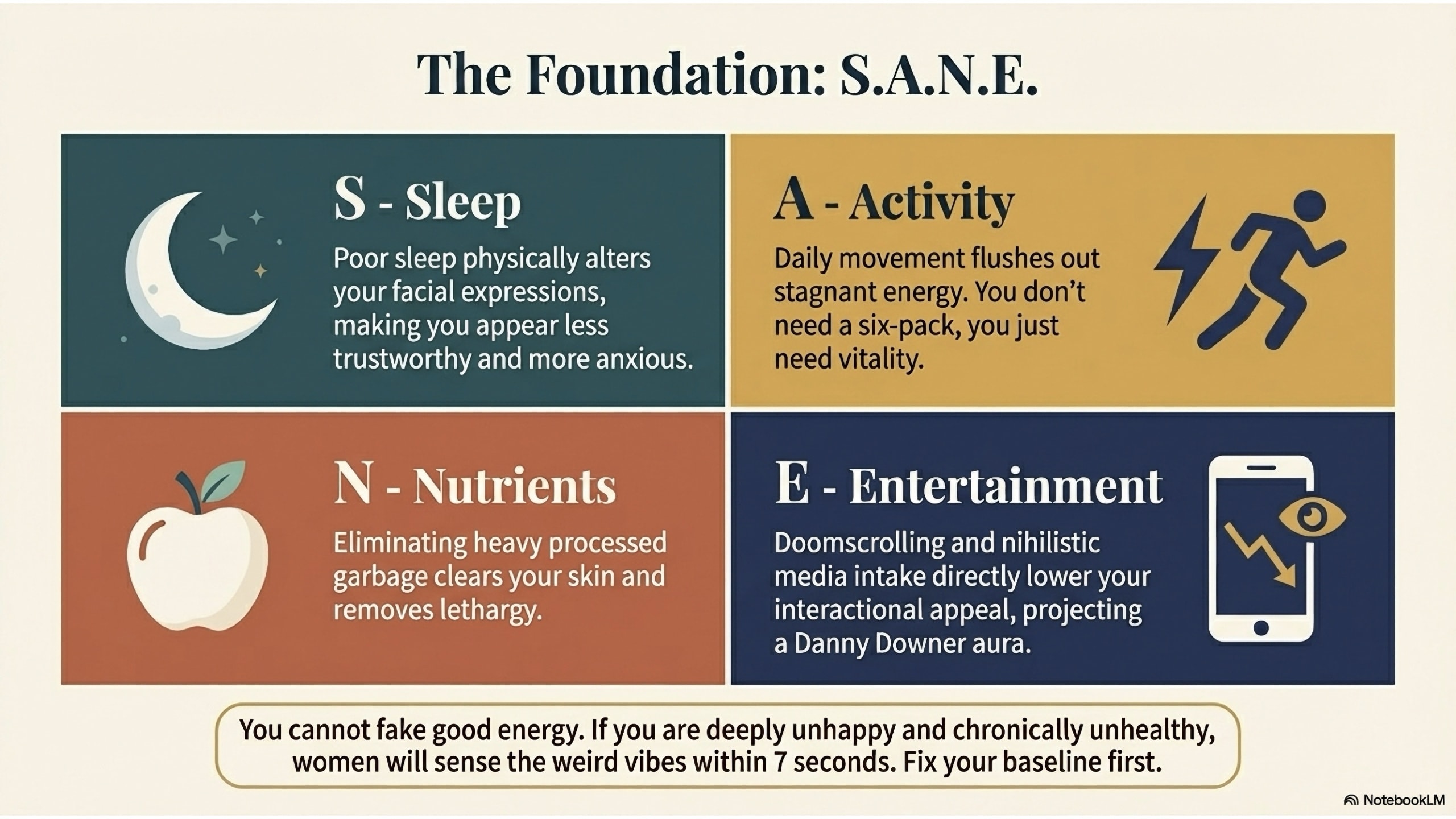
SANE Approach: An acronym for Sleep, Activity, Nutrients, and Entertainment. It is an "upgrade tactic" suggesting that maintaining good habits in these four areas creates a person's best, most attractive self.
Dark Island: A metaphorical state of being where a lonely person "stays afloat" through non-stop work, distractions, or negative online echo chambers.
Woodshedding: A term borrowed from jazz musicians referring to isolating oneself to work intensely on personal ideas or skills to improve quickly.
Lonely Chapter: A period of uncertainty and isolation where a person leaves behind old habits and friends to focus on self-improvement and reaching a higher level of success.
Spotlight Effect: A psychological phenomenon where individuals massively overestimate how much attention others are paying to their small mistakes or awkward moments.
Looks Matching: The theory that people only pair up with partners in similar "leagues" of physical attractiveness.
Hero Mindset: A perspective that reframes setbacks and failures as necessary challenges in a "hero's journey" rather than evidence of being doomed.
The Plum Pill: This is a combination of the Black, Red, and Blue pill theories with the idea that most guys will “take” all of these “pills” throughout the process of being alone and later, finding a partner and experiencing real happiness in real life.
Repressed Anger Therapy: Releasing repressed anger or negativity by listening to intense music (like the band Linkin Park), or using hard exercise, or hard laughter to "get the venom out of your system".
Self-Neuter: The act of a man disarming his own personality or becoming overly timid because he is afraid of being offensive or "bounced around" for saying the wrong thing.
Self-Sabotage via Explaining: This is when a man apologizes or attempts to "explain away" his flaws or shortcomings to a woman and this ALWAYS makes him look bad.
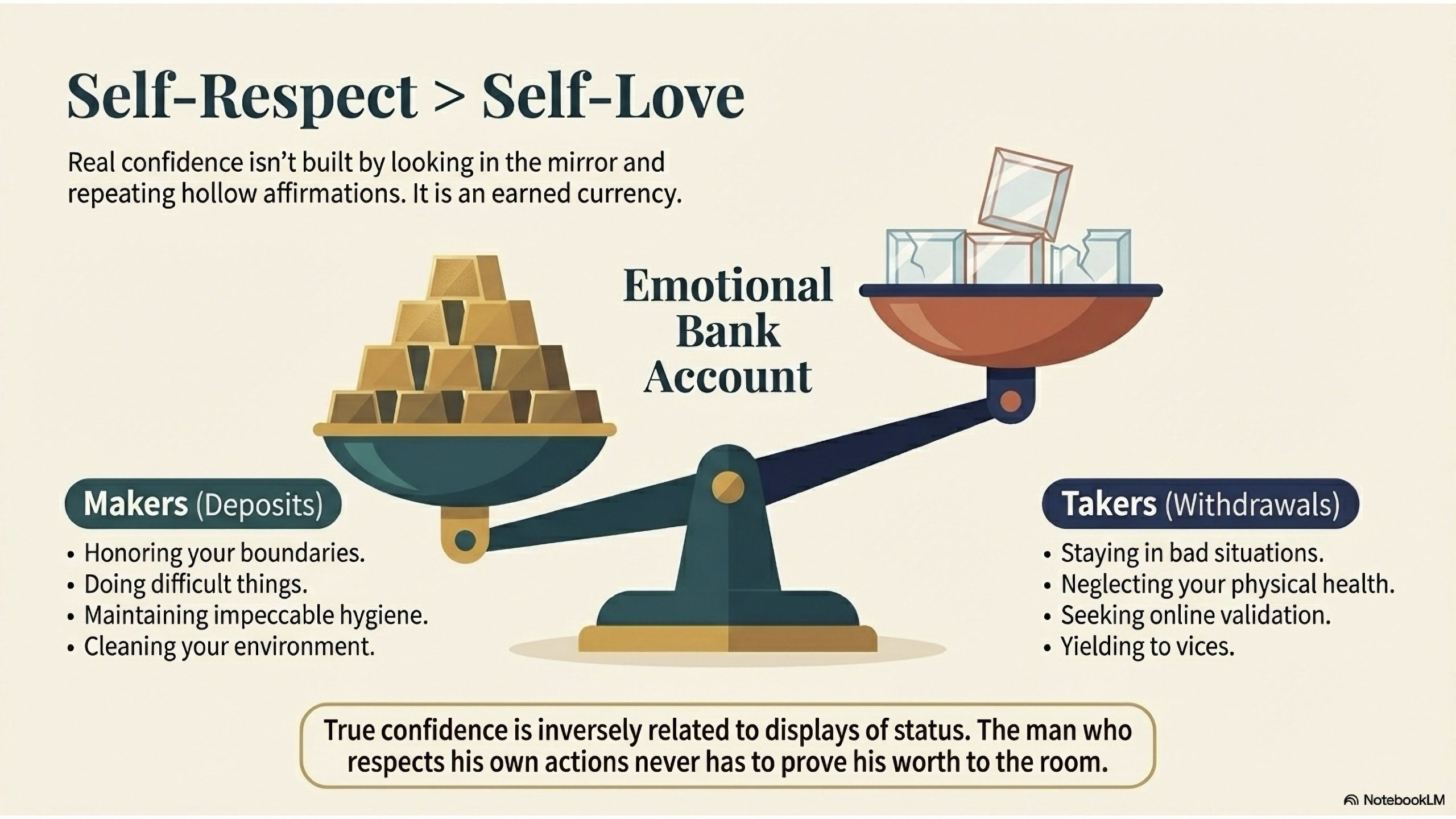
Makers and Takers Principle: An "emotional bank account" concept where "makers" are positive actions (honoring boundaries, completing challenges) that build self-esteem, while "takers" are vices or seeking validation that drain it.
Confidence Debt: A lack of self-respect created by staying in toxic relationships or clinging to bad habits.
Confidence Capital: The "compound interest" of self-respect built by making small choices that align with one’s values.
High-Mate Value: Markers that indicate a person would be a good partner, which for men can include confidence, ambition, and a sense of humor regardless of current financial status.
Authentic Masculinity: Characterized by being capable, standing up for oneself and others, and practicing restraint rather than following every primal impulse.
Low-Effort Masculinity: Performative, "tough guy" behaviors or "know-it-all" displays that are easy to do but often score low in actual attractiveness.
Chimp Legacy Programming: Primal impulses guided by emotion rather than restraint, such as the urge to respond to disrespect with violence or to overwhelm a new woman with needy attention.
Maladvocates: A term for individuals who present as advocates for a cause but use malevolent or harmful tactics that actually set the cause back.
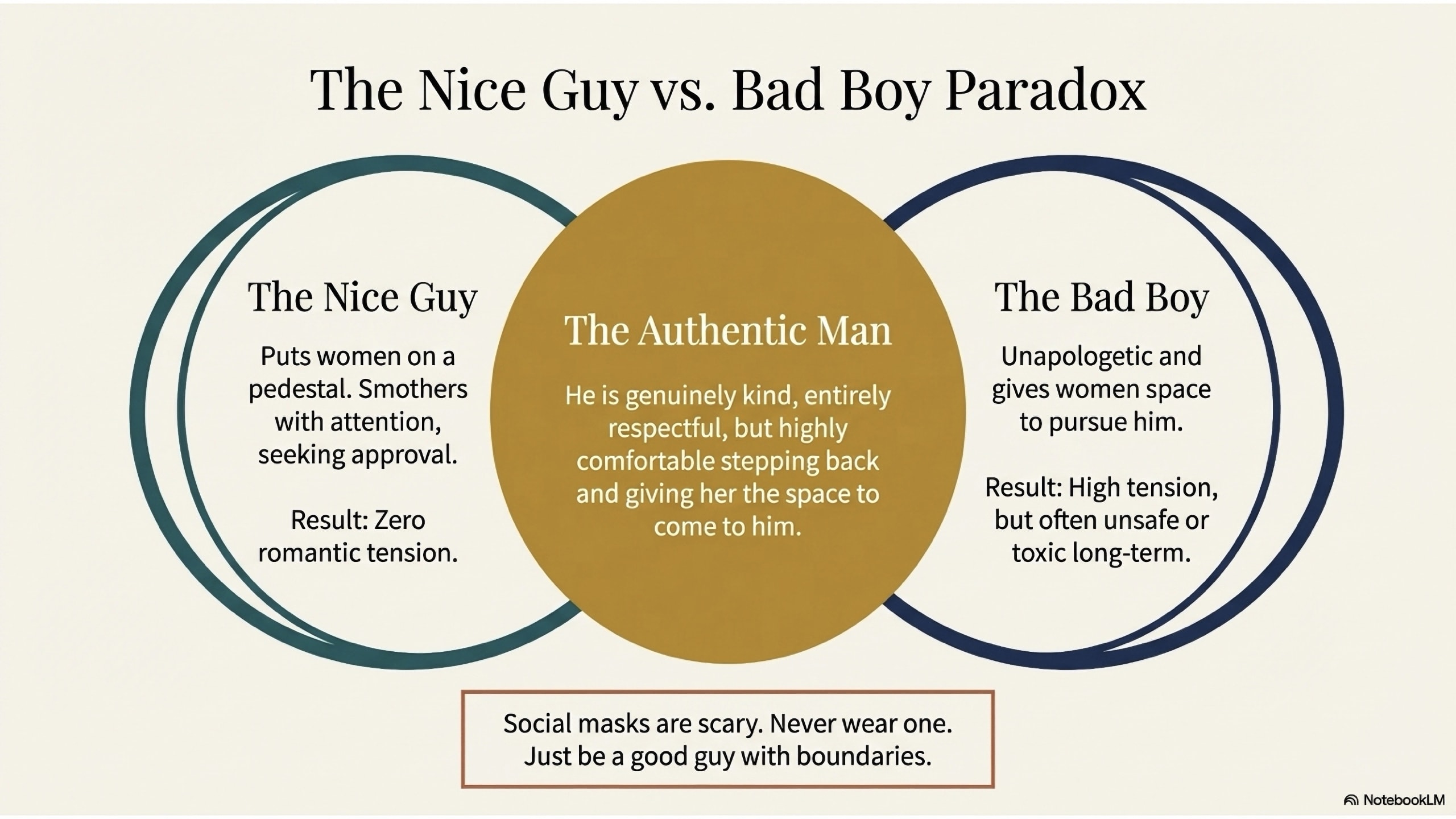
Pedestalling Effect: Treating someone as if they are above normal human interaction, which creates emotional distance and blocks real connection.
Micro Moments: Small instances of genuine connection, such as shared laughter or brief eye contact, that build attraction more effectively than grand gestures.
Authentic Tension: A spark of chemistry created when a person is direct about their interest while still stepping back to provide space.
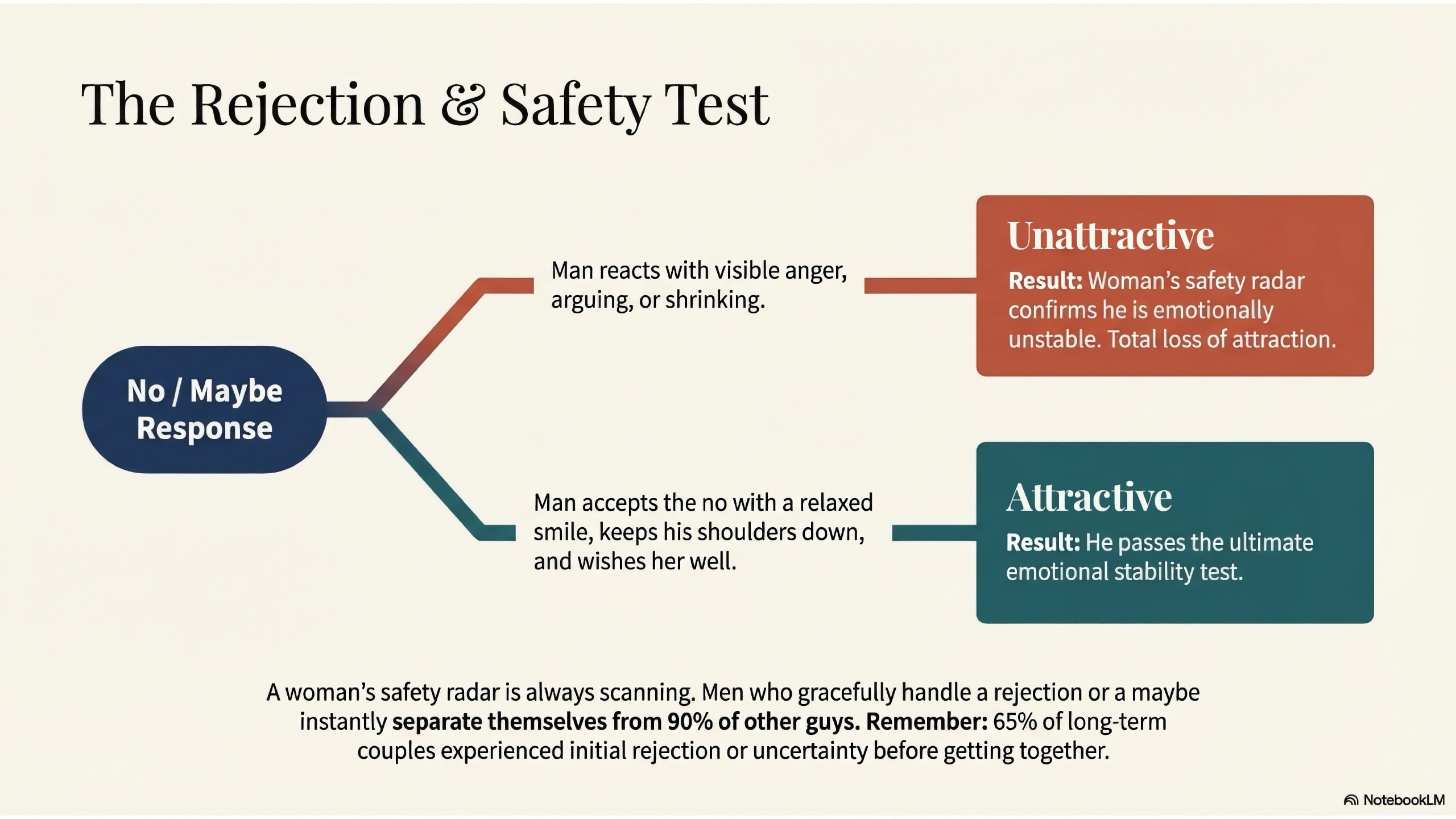
Kindness Test: A subconscious evaluation by women to see if a man remains genuinely kind and emotionally stable even when faced with rejection or obstacles.
The "Maybe" Category: This term describes a middle ground where a woman might initially seem to have no interest in a man, but is actually just waiting to get to know him better before making a decision.
Elite Class: A term for men who stay calm during rejection and maintain a sense of humor; these men are viewed as high-value catches because they prioritize the comfort and safety of those around them.
Uniquely Handsome: The idea that there is more than one kind of “handsome.” That is, there is classically handsome and there is a form of handsome where a man who has a different kind of look can be very appealing to women too.
Myth of Constant Hotness: The false belief that attractive people have always been attractive, which ignores the reality that most people go through an "ugly duckling phase" before looking their most attractive.
Rizz: A slang term for charisma, that comes from having the right energy and being 100% "dialed in" and present in a conversation.
Come-along Technique: An invitation style where a man mentions a fun activity he is already planning to do and suggests a woman "come along," making the request low-pressure and casual.
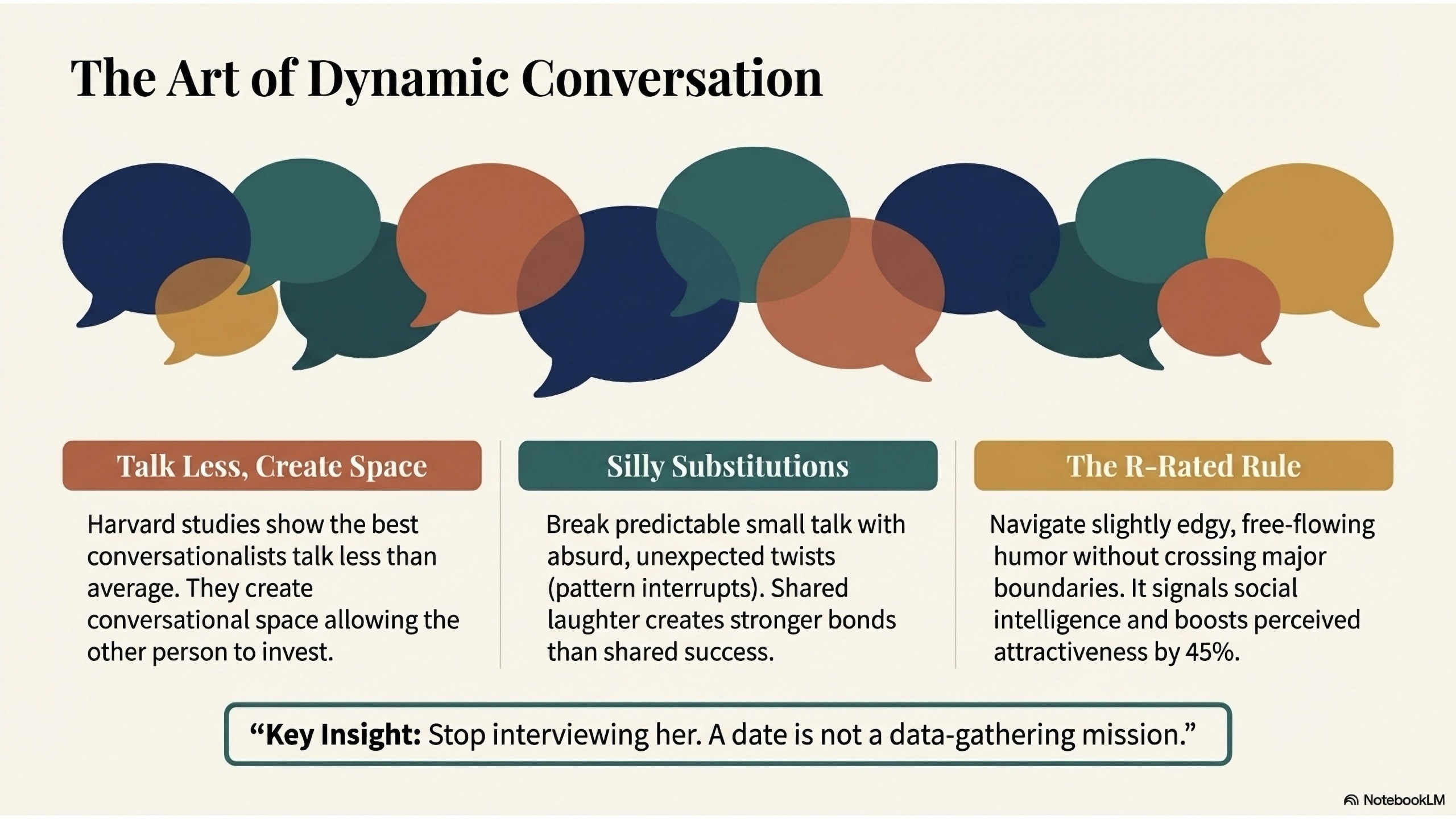
Conversational Space: The ability of skilled talkers to get others to speak and then stay "dialed in" to what they are saying.
Cognitive Flexibility: The brain's ability to make unexpected connections, which is enhanced by regular reading and helps in relating to new people.
Self-Disclosure Reciprocity: The back-and-forth process in a conversation where one person shares something personal and the other responds with a similar disclosure, building intimacy.
R-Rated Rule: A guideline for conversation that encourages being edgy, free, and funny without crossing into offensive or "X-rated" territory.
Silly Substitutions: A technique for generating humor by taking a normal story and adding a crazy or unexpected twist at the end.
Pattern Interrupt: Breaking a person's expected thought pattern with humor, which increases emotional connection and makes the person being funny more memorable.
Misattribution Bias: A cognitive bias where men incorrectly assume women are only with certain partners for visible reasons (like looks or money) while failing to see invisible traits like humor or chemistry.
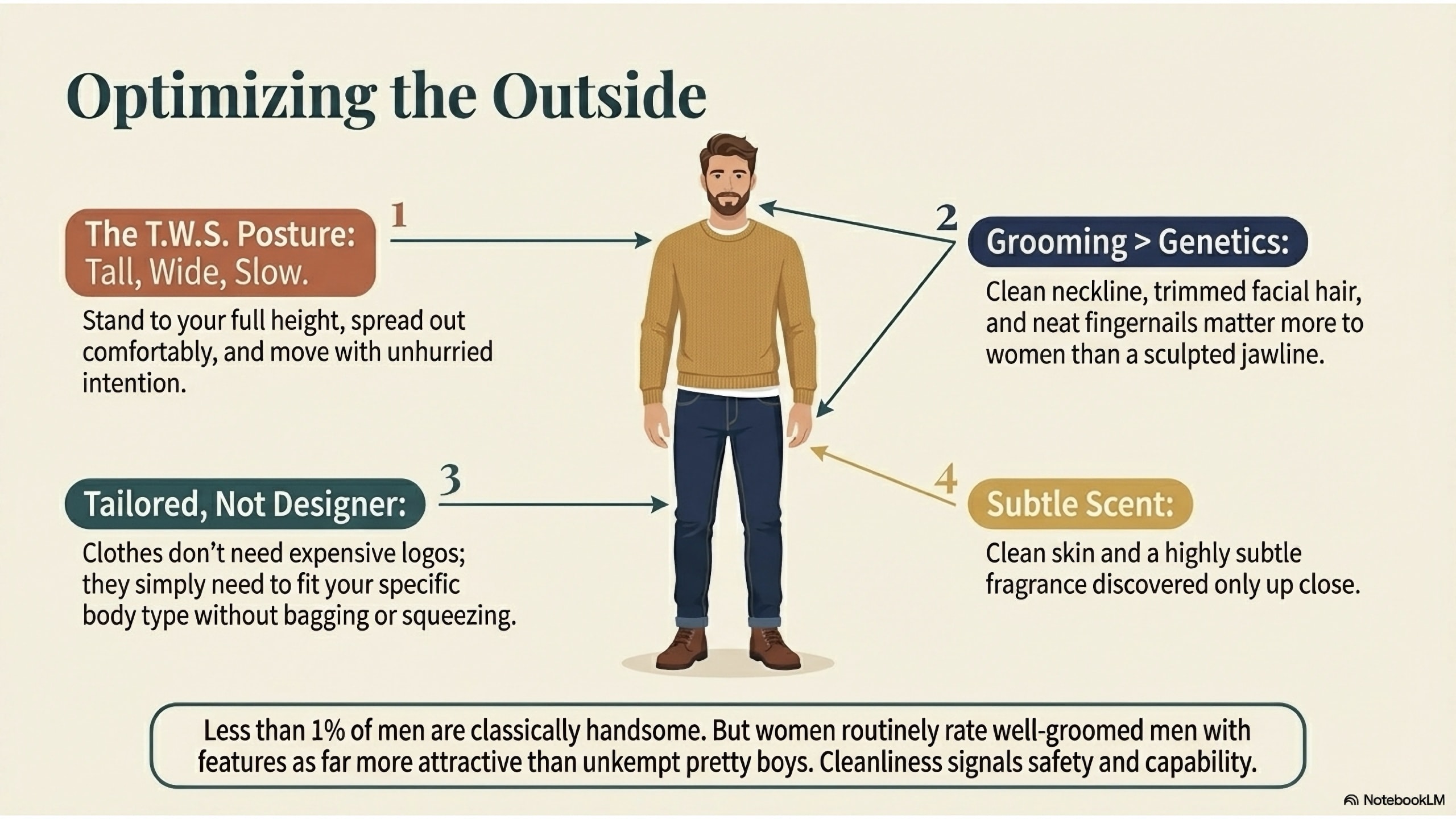
TWS Principle: Stands for Tall, Wide, Slow. It refers to standing tall (posture), taking up natural space (wide), and moving with intention (slow) to look and feel confident regardless of height.
Attribution Bias: The tendency to overanalyze neutral behaviors (like shyness) and misinterpret them when emotionally invested in someone.
Playing Ball: A metaphor for social reciprocation where one person "throws" a conversational ball (like a compliment) and the other "throws it back" by engaging enthusiastically.
Uncertainty Principle: The idea that the more emotionally invested a person is, the more likely they are to miss signs of disinterest or imagine interest that isn't there.
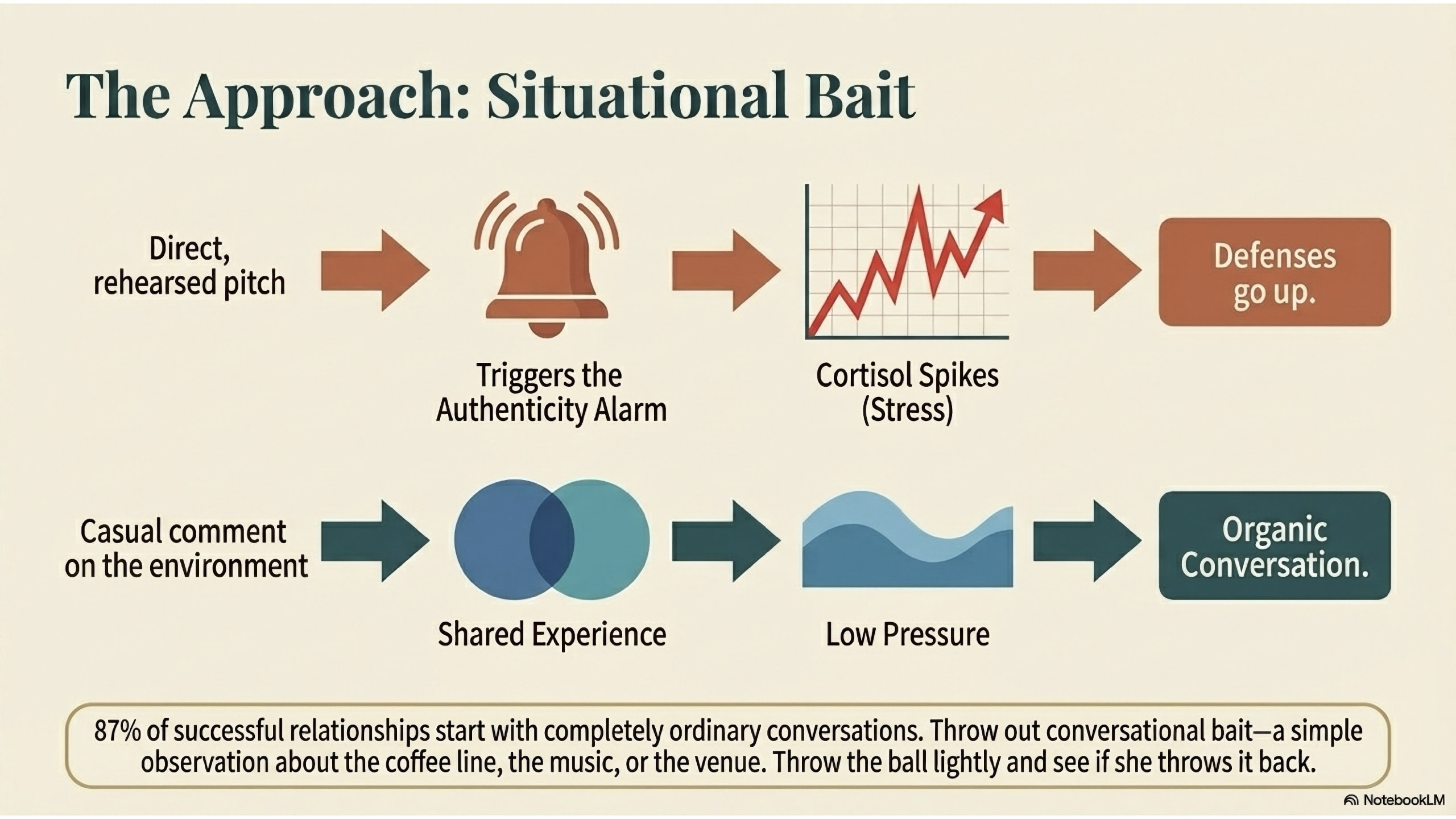
Authenticity Alarm: A built-in biological detector that triggers when someone is using rehearsed lines or fake behavior.
Conversational Bait: Low-pressure, situational comments that invite a response without putting the other person "on the spot".
Elicitation: A tactic of making a comment about a situation that leads the other person to offer information by correcting or adding to the statement.
Proximity Under Pressure: The phenomenon where social bonding increases when people collectively experience a minor inconvenience or shared adversity.
Main Character Syndrome: The tendency to vastly overestimate one's own importance in a social situation, leading to performance anxiety or strange behavior.
Physiological Coherence: Terms describing how the heart rates, breathing patterns, and brain patterns of two people can "sync up" during genuine, present engagement.
Mini Approaches: Quick, casual interactions (like a brief hello or a smile) that build familiarity and lower defensiveness before a real conversation starts later.
Social Proof: The trust given more freely to someone when they are met through shared activities or mutual friends.
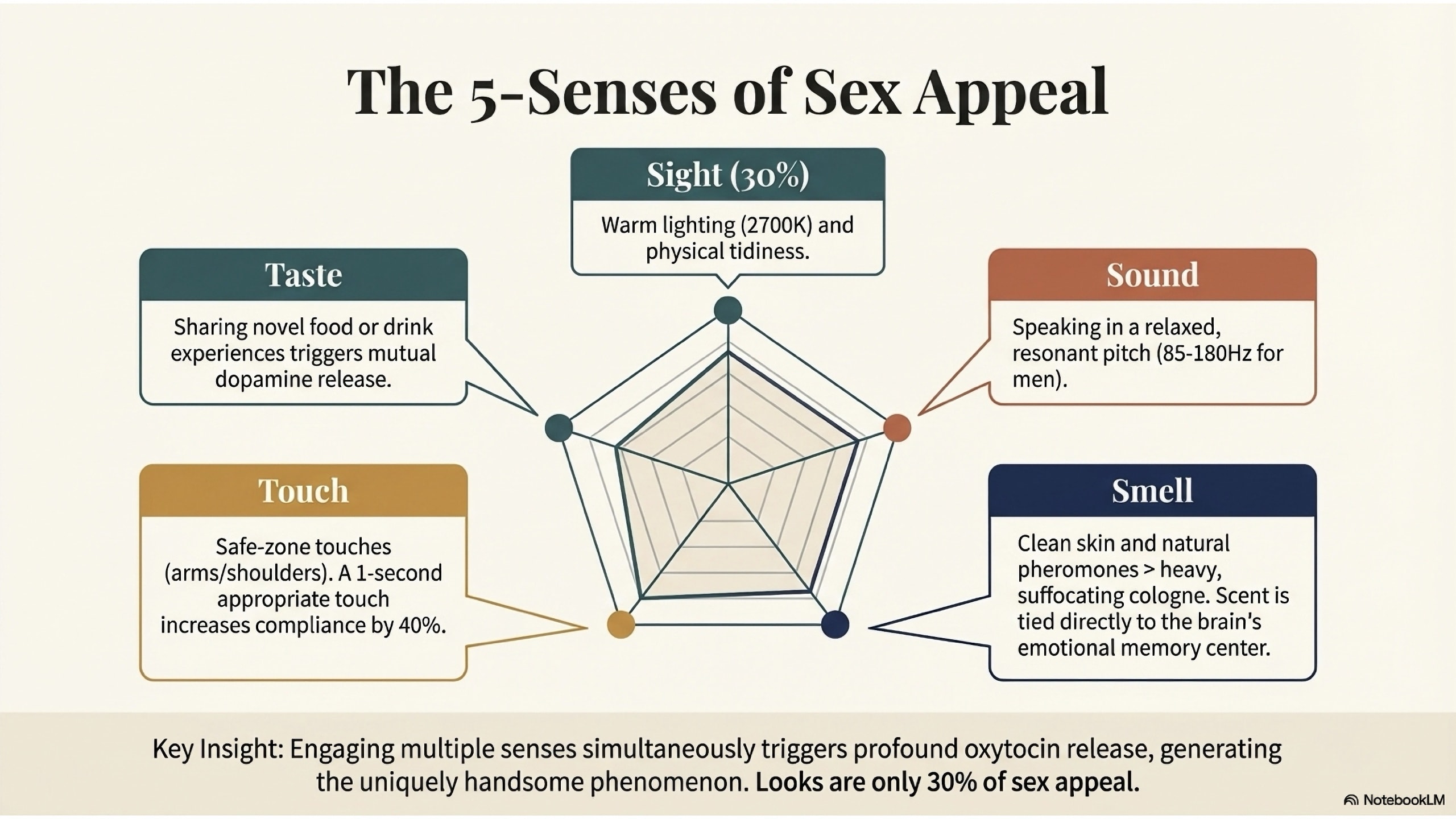
Neural Synchrony: A biological state where the brain patterns of two people actually align when all five senses are positively engaged.
Safe Zone Touches: Initial, non-threatening physical contact intended to build connection, specifically light and brief touches on the upper arms or shoulders.
Love at First Kiss Phenomenon: A situation where attraction levels skyrocket following a first kiss, provided the interaction involves good energy and hygiene.
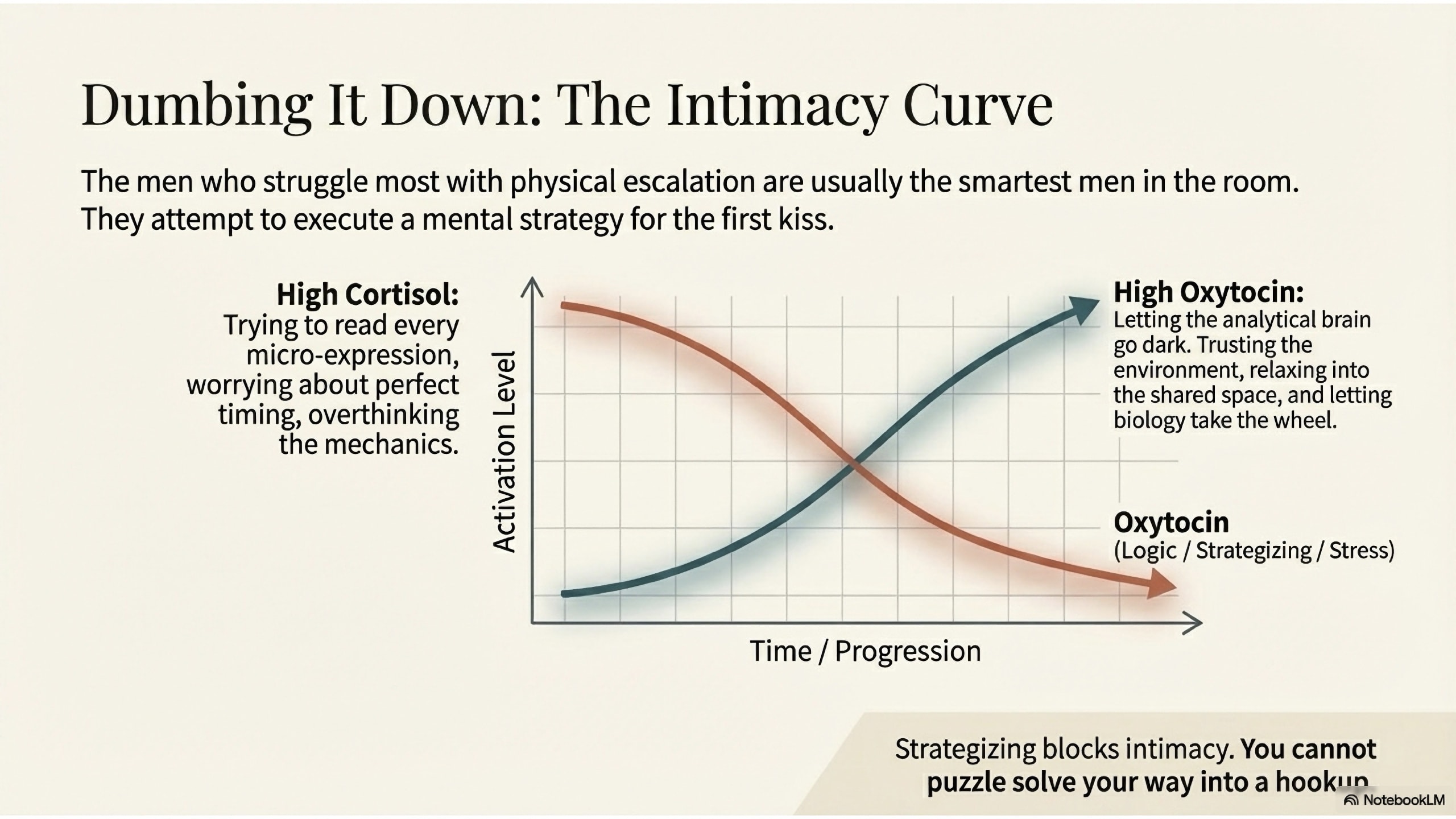
Analytical Mode: A mental state where individuals overthink social interactions, leading to elevated stress hormones (cortisol) that can suppress bonding hormones (oxytocin).
Poking the Soufflé: An analogy for overthinking a new connection by constantly seeking feedback or reassurance, which eventually causes the "vibe" to fall flat.
Mental Malware: A term for the ordered structure of negative beliefs and biases that keeps a person trapped in a "doom loop" of self-defeating thoughts.
Doom Loop: A psychological cycle where a man continually reaffirms a negative perspective of himself as an "ugly loser," often finding a strange sense of satisfaction in that type of self-flagellation.
Demolition: The first stage of personal growth that involves deconstructing and discarding old, faulty ways of thinking to build a better belief system in its place.